Who Will Review
My Project Enquiry?
All enquiries are reviewed by our leadership team who have a wealth of IT projects experience.
They will evaluate the expertise you require and will engage in finding the perfect fit for you.

A 3-hour workshop for founders and CTOs: Core $600 ships a PRD and up to 5 user journeys in 2 business days. Any vendor can quote from it.










Unscoped software work produces padded estimates, mid-sprint stalls, and features that miss the business goal. A Discovery Workshop replaces a guess with a written MVP scope, risks, and journeys a vendor can bid against. If the unknown is technical feasibility rather than scope, start with a PoC vs MVP decision.

Two fixed packages. Core ($600, 2 business days): 3-hour workshop, PRD, up to 5 user journeys. Core + Architecture ($1,200, 5 business days): the same plus stack, data model, and a scalability note. Use the Architecture package when you need to choose a SaaS technology stack before vendors quote. For the later build, see the MVP development cost breakdown.

| Core Discovery Package$600Let's talk | Core + Architecture Blueprint$1200Let's talk |
|---|---|---|
| The 3-hour Workshop | ✅ | ✅ |
| Product Requirements Document (PRD) | ✅ | ✅ |
| Technical Architecture Document | - | ✅ |
| Description | Product Requirements Document (PRD) and up to 5 User Journeys (UJs) | PRD, 5 UJs, tech stack recommendations, database schema, and a scalability plan |
| Delivery Time | 2 business days | 5 business days |
Four steps: fit call, pre-work questionnaire, 3-hour workshop, written blueprint. No build commitment.
The 3-hour session locks goals, users, MVP scope, and open risks into a plan a developer can estimate from. You receive a vendor-agnostic PRD and up to 5 user journeys. The documents are yours — take them to any vendor, including us. There is no obligation to build with SoftKraft.
A short call to see if the workshop is the right next step for your project.
We check whether we have the expertise for your domain before anyone pays for the workshop.
You leave knowing whether we recommend the workshop, a narrower technical spike, or a different engagement.

All enquiries are reviewed by our leadership team who have a wealth of IT projects experience.
They will evaluate the expertise you require and will engage in finding the perfect fit for you.

Before the 3-hour session, we send a tailored questionnaire so you gather stakeholders, data, and constraints. Workshop time goes to decisions, not basic intake.
The questionnaire puts goals, users, MVP scope, and known risks on the table before the live session.
Your team aligns internally first, so the workshop starts from a shared set of facts instead of competing versions of the idea.

Define what success looks like for the business and for end users, so the PRD is tied to a decision, not a feature wishlist.
Name who you are building for. Personas keep every journey and MVP cut tied to a real user, not an abstract “everyone.”
List the smallest set of functionality needed to launch. That cut becomes the in-scope / out-of-scope line in the PRD.
Budget, stack, compliance, and timeline constraints go in before the workshop, so the plan is bid-ready instead of optimistic.
In a structured 3-hour session we cover goals, target users, MVP features, constraints, and success metrics. The output is a scoped plan, not a slide deck of ideas.
We run the agenda through personas, core journeys, non-functional requirements, and open risks so the session produces decisions, not notes.
Edge cases, integrations, and constraints that usually appear mid-sprint are named in the room and written into the blueprint.

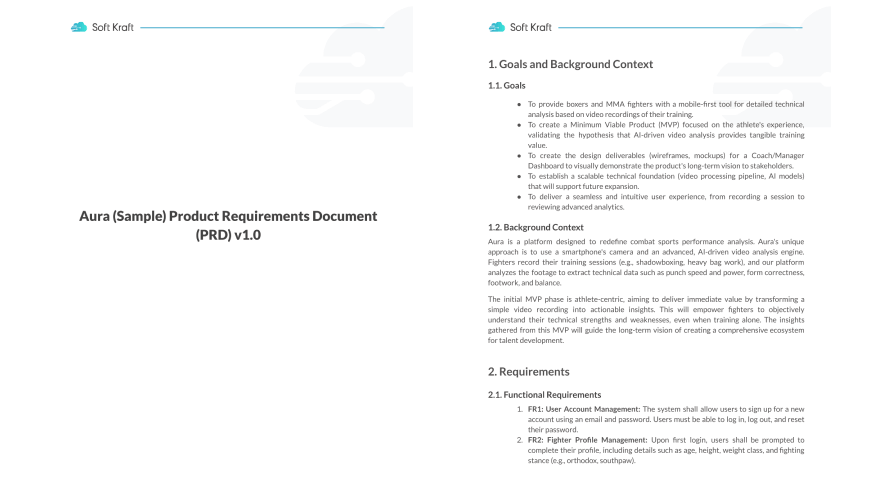
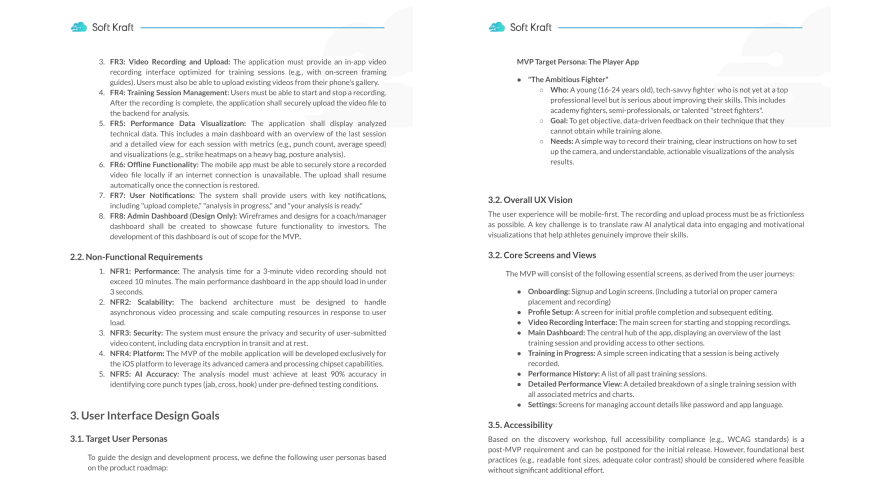
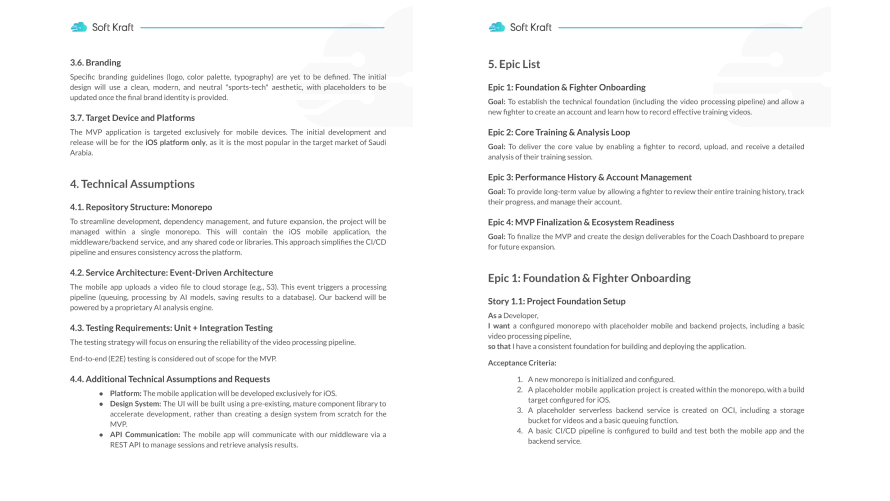
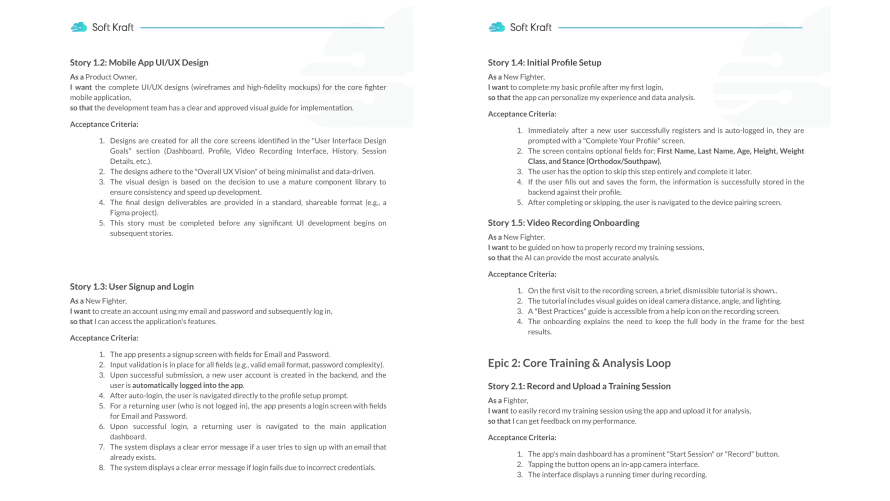
After the session we write the blueprint: a Product Requirements Document (PRD) plus user journeys. The PRD is the source of truth for goals, MVP scope, journeys, and open risks.
The PRD records goals, in-scope and out-of-scope work, and technical constraints so any vendor can quote against the same document.
User journeys cover the happy path and edge cases for up to five flows, so estimates include the work that usually appears mid-sprint.