Migration of on-premise server tooling into AWS serverless
Deploying an AWS serverless tooling kit to benefit from the dynamic nature of AWS cloud services and an elastic serverless pricing model





Cloud migration consulting is the work of choosing what to move, in which order, and with which AWS services—before cutover. SoftKraft helps CTOs replace a big-bang move with assessed waves, a secure landing zone, and a measured TCO.










Six areas of work that take an application from an assessment to a production workload on AWS, in waves you can test and reverse.
We map dependencies, owners, and a business case per workload, then sequence migration waves against the AWS 7 Rs. You get a testable order of move—not a single cutover date. See the cloud migration challenges to plan for.
We set identity, network, backup, and cost guardrails before apps move. The Five Pillars of the AWS Well-Architected Framework are the review standard—not a slide deck after go-live.
Lift-and-shift is the default only when the app is already 12-factor and the landing zone is ready. Otherwise we list the minimum replatform changes required to run on ECS, Fargate, or Lambda without taking the old failure modes with you.
We place each workload on EC2, ECS, Fargate, Spot, or Lambda against performance, ops load, and unit cost—not a default "serverless everything". For the architecture trade-off, see when AWS serverless architecture fits.
Terraform (or CloudFormation) defines the landing zone and app environments. The pipeline—AWS CodeBuild, Jenkins, or your current tool—promotes the same artifact through test and prod with an automated test gate before cutover.
Dual-running cost is planned before wave 1. Each wave has a rollback path, success metrics (latency, error rate, cost per unit), and an owner on your side and ours.
By implementing ISO 27001 and other certifications, we ensure that our software development services are secure, reliable, and compliant with the highest industry standards.
 Our Commitments to You
You can trust that your data is safe and secure with our ISO 27001 certification and best practices in security and data protection.
You get piece-of-mind with our QA processes that adhere to the highest standards for delivering enterprise-grade software products.
You can count on us to quickly adjust to changes in your project needs and provide engineering talent with the required skills.
We partner with entrepreneurs, business and technology leaders to bring their innovative software-driven products, processes, and business ventures to life.

Serverless tooling, video platform automation, and ongoing AWS operations—three delivery shapes CTOs actually buy.
Deploying an AWS serverless tooling kit to benefit from the dynamic nature of AWS cloud services and an elastic serverless pricing model
Using AWS services and Ansible-based deployment automation scripts to build an efficiently automated environment for a video platform and ensure short time-to-market

Deploying interim devops engineers to augment the client in-house team and ensure continuous devops infrastructure support as well as permanent staff onboarding.
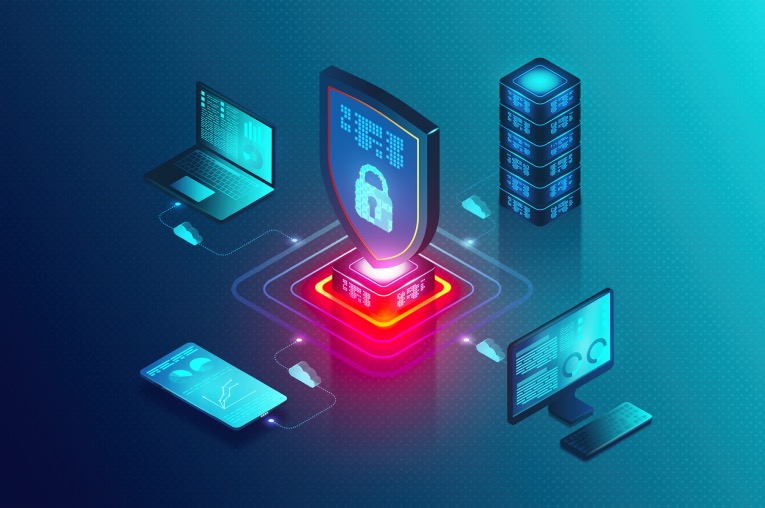
Cloud migration is moving applications, data, and the operating model that runs them to a cloud provider—usually in waves, not as one cutover. Consulting defines the sequence, landing zone, and success metrics before the first workload moves.
SoftKraft works AWS-first, because that is where our engineers hold certifications and production experience. We work with Google Cloud or Azure when your workloads already run there, or when compliance requires a specific region or provider.
Lift-and-shift is wrong when the app still needs a shared database, manual release, or a data center network model. You pay cloud rates for the same outages. Replatform or refactor those workloads; shift only what already matches 12-factor and a prepared landing zone.
We assess each workload against the AWS 7 Rs during planning, so the decision is per application rather than a single policy for the whole portfolio. The output is a written list of the minimum changes required before a workload joins a migration wave.
We run four stages: assess workloads and dependencies; build the landing zone; migrate in testable waves with rollback; then operate with FinOps and on-call ownership. Each stage has an exit metric before the next wave starts.
Dependency map, workload owners, 7 Rs decision per application, and the business case for retiring legacy capacity.
Identity, network segmentation, backup, logging, and cost guardrails in code, reviewed against the Well-Architected Framework.
Migrate a small, testable group of workloads, validate against acceptance criteria, and keep a rollback path until the metrics hold.
Monitoring, incident ownership, and cost review after cutover. If you are still choosing an adoption model, start with our cloud adoption framework comparison.
Dual-running is priced per wave: old capacity stays until the new path meets latency, error, and unit-cost thresholds. We baseline spend before the move, tag new resources, and retire the old stack against a written date—not "when it feels stable".
Workload placement is where most of the cost decision sits. Choosing between EC2, Fargate, Spot, and Lambda per workload keeps the cloud bill tied to actual usage instead of provisioned capacity you no longer need.
Security controls go into the landing zone before workloads move, under the shared responsibility model: AWS secures the infrastructure, and we configure identity, encryption, network boundaries, backup, and audit logging on your side of the line.
Our delivery process is ISO 27001 certified, which governs access control and data handling throughout the migration. Every environment is defined in code, so the configuration that passed review is the configuration that runs in production.