
10 Open Banking API Use Cases Every FinTech Leader Must Know
Quick Answer: Open banking APIs let regulated third parties retrieve consented account data or initiate bank payments without handling a customer's banking credentials. For a fintech CTO, the practical use cases are identity and account verification, pay-by-bank, financial-data aggregation, reconciliation, fraud signals, and affordability checks. A production implementation needs a PSD2-compliant consent lifecycle, OAuth 2.0/OpenID Connect security, idempotent event processing, audit trails, and market-specific bank coverage.
Open banking has moved from a regulatory integration to product infrastructure for payments, lending, and financial-data workflows. A business case should use product-specific evidence—such as payment completion, underwriting turnaround time, or reconciliation effort—rather than a global market forecast that may not reflect the target country or bank coverage.
This guide explains ten implementation patterns and the architectural controls that make them usable in production. For a broader comparison of regulated financial interfaces, see FinTech API use cases; for product-delivery decisions, see financial app development and software development for finance.
- What is open banking, and which API roles does it introduce?
- What business and technical benefits can open banking APIs deliver?
- Which open banking API use cases should a fintech team prioritize?
- How can open banking support identity and account verification?
- How does payment initiation enable secure pay-by-bank?
- How can a product use consented account and transaction data?
- How can open banking data personalise financial services?
- How can open banking power budgeting and savings tools?
- How can open banking automate financial operations?
- How can open banking strengthen fraud prevention?
- How can lenders use open banking in credit workflows?
- How can transaction data improve financial education?
- Which new digital services can open banking enable?
- What should a fintech build before integrating an open banking API?
What is open banking, and which API roles does it introduce?
Open banking allows regulated third-party providers to access a customer's payment-account data or initiate a payment through application programming interfaces (APIs), after explicit customer consent. In PSD2 terminology, an Account Information Service Provider (AISP) reads account information, while a Payment Initiation Service Provider (PISP) initiates payments. The bank remains the account-servicing payment service provider and authenticates the customer.
Open banking is not a universal data pipe. Available banks, scopes, payment types, consent duration, and interface quality vary by jurisdiction and provider. Architecture and procurement teams must map each product journey to the applicable regulatory model, data fields, service-level expectations, and fallback path.
How did open banking evolve into open finance?
Open banking has experienced significant growth and evolution, characterized by three distinct waves over the past decade:
Inception and Regulation (2015-2018): Open Banking originated in the United Kingdom with the implementation of the Revised Payment Services Directive (PSD2) by the European Union in 2018. This regulation mandated banks to open their payment services and customer data to third-party providers, fostering competition and innovation in financial services. The primary objective was to provide consumers with more control over their financial data, enhance transparency, and stimulate the development of new financial products and services.
Early Adoption and Expansion (2018-2020): Following the UK and EU's lead, other regions began exploring and implementing their own Open Banking frameworks. In Australia, the Consumer Data Right (CDR) was introduced to promote data sharing across various sectors, including banking. Countries like Singapore and Hong Kong also proactively established frameworks to support Open Banking. This phase saw significant voluntary adoption in the U.S., driven by market demand and competitive pressures, despite the absence of a regulatory mandate.
Global Integration and Innovation (2020-Present): The current phase, often referred to as open finance, extends open banking principles to a broader range of financial products, including savings accounts, mortgages, and insurance. This wave is also characterized by the participation of non-financial industries and evolving regulatory frameworks to accommodate these new use cases.
How do open banking APIs work in a production flow?
Open banking APIs enable seamless and secure interactions between consumers, third-party providers, and banks. Here’s a step-by-step breakdown of how these APIs operate:
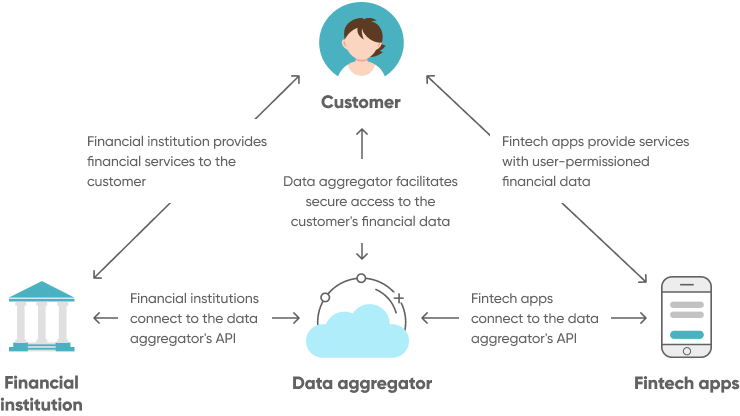
Step 1: Consumer consent
The process begins with the consumer granting consent to a third-party provider to access their banking data. This consent is typically obtained through a user interface where the consumer logs in to their bank account and approves the data access request. This step ensures that the consumer is fully aware of and agrees to the data sharing.
Step 2: API request
Once consent is secured, the third-party provider sends an API request to the bank’s API endpoint. This request includes an authorization token obtained during the consumer consent process, which serves as a digital key to access the consumer’s data.
Step 3: Authentication
The bank verifies the authorization token to confirm that the request is legitimate and comes from an authorized third-party provider. This step often involves additional security measures, such as Strong Customer Authentication (SCA), to further validate the request.
Step 4: Data retrieval or action execution
Upon successful authentication, the bank processes the API call. Depending on the nature of the request, the bank might:
- Retrieve and return the requested data, such as account balances, transaction histories, or customer details.
- Initiate an action, such as making a payment or setting up a direct debit.
Step 5: Response
The bank sends a response back to the third-party provider through the API. This response contains either the requested data or a confirmation of the completed action, ensuring the provider can proceed with delivering their service.
Step 6: Data usage
Finally, the third-party provider uses only the data permitted by the consent to deliver the requested service. A production platform should persist consent status, requested scopes, timestamps, provider responses, and revocation events in an immutable audit trail; it should not treat a successful initial connection as permanent authorization.
What business and technical benefits can open banking APIs deliver?
Open banking can reduce manual data collection and remove payment intermediaries, but it creates integration and operational responsibilities. The benefit case should be measured with product-specific metrics such as payment-conversion rate, reconciliation time, fraud-loss rate, underwriting turnaround time, or cost per verified account—not generic “innovation” claims.
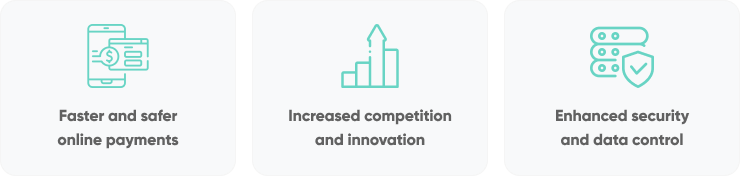
Faster and safer online payments
Open banking can enable account-to-account payments from a customer’s bank account to a merchant. A payment flow should measure completion, fallback, settlement, refund, and support outcomes; encryption and SCA help, but they do not eliminate fraud or implementation risk.
Increased competition and innovation
Standardised interfaces can reduce the work of integrating a separate bank interface for every market. Coverage, data quality, and supported payment types remain provider- and bank-specific, so each integration needs a documented fallback and support model.
Enhanced security and data control
Consent, scoped tokens, SCA, and regulated-provider controls are useful safeguards. The fintech remains responsible for least-privilege access, encrypted storage, retention rules, audit logging, and a tested revocation process.
Which open banking API use cases should a fintech team prioritize?
Prioritize the use case with a measurable operational bottleneck and a feasible regulatory path. The ten patterns below span customer onboarding, payments, lending, finance operations, and consumer-facing financial tools.
How can open banking support identity and account verification?
Open banking can support account ownership and identity corroboration because banks hold customer and account records. It should not be presented as a standalone identity-proofing method: the currency and completeness of records, matching rules, and permitted evidence depend on the bank, provider, jurisdiction, and risk model.
When a user consents, an open banking API can retrieve account-holder details, account identifiers, and selected transaction data directly from the bank. The data can corroborate an identity or account-ownership claim, but it is not automatically equivalent to a regulated KYC decision. The acceptable evidence, matching rules, retention period, and exception workflow depend on the jurisdiction and risk model.
For higher-assurance onboarding, combine bank-derived signals with an ID-document and biometric-verification provider, then route low-confidence matches to case management. This IDP-style workflow needs data-minimization rules, a documented decision trail, and a separation between identity proofing, sanctions screening, and ongoing transaction monitoring.
Examples of APIs for identity verification:
- Plaid Identity: Facilitates seamless account verification by directly connecting merchants to consumer bank accounts, allowing retrieval and verification of information such as account and routing numbers.
- TrueLayer’s Identification API: Enables digital authentication for third-party providers, allowing secure data sharing or payments based on customer-provided details like name, address, and contact information.
- Yodlee: Leverages bank and financial-data connections to obtain and validate customer information.
Case Study:
Poland's Trusted Profile illustrates a bank-assisted identity journey for public services. The relevant lesson for product teams is that a bank login can be one evidence source in a defined identity process; it does not remove the need to determine the required assurance level and legal basis.
The service lets eligible bank customers authenticate through participating banks to establish or use a Trusted Profile. A comparable commercial implementation should define the identity provider, evidence retained, manual-review route, and handling of unsuccessful matches before treating the bank journey as an onboarding control.
How does payment initiation enable secure pay-by-bank?
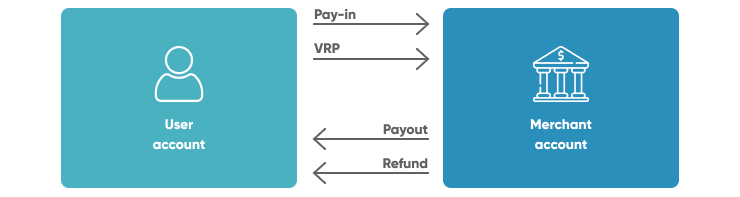
Payment Initiation Service Providers can initiate a bank payment after the user has authorised the flow. Compared with screen scraping, the model avoids collecting banking credentials in the fintech application and gives the product team an explicit consent and authorisation trail.
The security model must be explicit: redirect customers to the bank or approved authentication journey, validate OAuth 2.0/OpenID Connect callback state, protect secrets in a managed vault, and verify signed provider webhooks. Strong Customer Authentication (SCA) reduces credential exposure, but it does not replace replay protection, idempotency keys, rate limits, or payment-status reconciliation.
Variable Recurring Payments (VRPs) are relevant where amount or frequency can vary, such as utilities and subscriptions. Availability, scheme rules, and bank support vary by market; product teams should therefore design a fallback payment path and test the end-to-end mandate, amendment, and cancellation journey.
Examples of APIs for secure payment processing:
- Plaid Payment API: Allows developers to build applications that can initiate bank transfers directly from users' bank accounts.
- TrueLayer Payments API: Supports payment-initiation journeys in its supported markets. Confirm institution coverage, settlement behaviour, pricing, and PSD2 responsibilities for the target flow.
- Token REST API: Offers an API along with a comprehensive platform for payment processing, enabling direct bank payments with high security and regulatory compliance.
Case study:
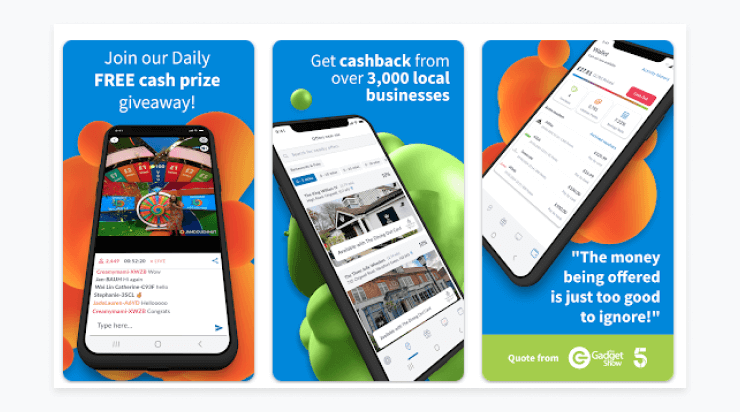
JamDoughnut is a cashback and rewards application that uses TrueLayer to offer a pay-by-bank option and handle refunds. The example illustrates that payment initiation must be designed as an operational workflow, not merely a checkout button: settlement confirmation, refunds, exceptions, and customer support require the same product ownership as the payment initiation itself.
How can a product use consented account and transaction data?
Open banking APIs can retrieve account balances, transaction histories, and spending patterns with explicit user consent. The data can support personal-finance tools, cash-flow views, and affordability workflows, subject to purpose limitation and applicable financial-services rules.
Treat aggregation as a data-engineering problem rather than a one-time API call. A robust platform normalizes provider payloads into a canonical transaction model, records source and refresh timestamps, deduplicates transactions, handles pending-to-booked transitions, and exposes data freshness to downstream services. Python services and queue-based ingestion can support enrichment workloads; an AWS KMS-encrypted store and least-privilege IAM roles can define the security boundary.
Examples of APIs to access financial data:
A regulated aggregator can reduce the effort of integrating individual bank APIs, but no provider connects to every institution or exposes identical fields in every market. During vendor selection, verify the exact institutions, data fields, refresh cadence, and error behaviour needed by the target workflow. Options include:
- Plaid API: Provides a single interface for retrieving account information, transactions, and other consumer-permissioned data from supported institutions.
- Finicity by Mastercard: Offers consumer-permissioned financial-data connectivity in supported use cases and markets.
- TrueLayer Data API: Provides access to account information and transaction history subject to the provider's supported connections and consent model.
Case study:
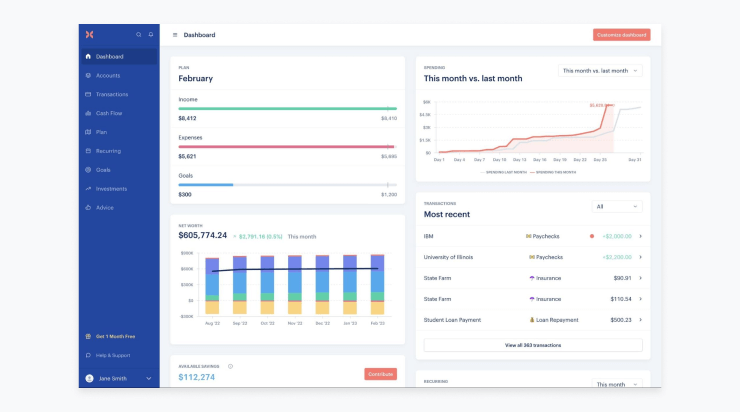
The Monarch Money budgeting app utilizes open banking APIs like Plaid, Finicity, and MX to aggregate financial data from a user’s multiple bank accounts, providing insights into spending habits and suggesting ways to save money. By leveraging these APIs, Monarch Money not only ensures seamless and secure data integration but also offers personalized financial advice, helping users achieve their financial goals with greater efficiency and confidence.
How can open banking data personalise financial services?
Consented transaction and balance data can support financial-wellness, affordability, and cash-flow features. Product teams should define the minimum data required for each recommendation, test data quality and bias, and separate informational experiences from regulated investment or credit decisions. Each customer-facing recommendation should be traceable to its inputs, rules, and confidence threshold.
Examples of APIs for building personalized financial services:
- Finicity by Mastercard: Allows developers to access consumer financial accounts to create customized budgeting, savings, and financial wellness tools.
- MX API: Provides rich financial data insights that help developers build personalized financial management applications, offering features like transaction categorization and predictive analytics.
- Bud API: Enables the creation of tailored financial products by aggregating and analyzing user data, helping developers offer personalized financial advice and product recommendations.
Case study:
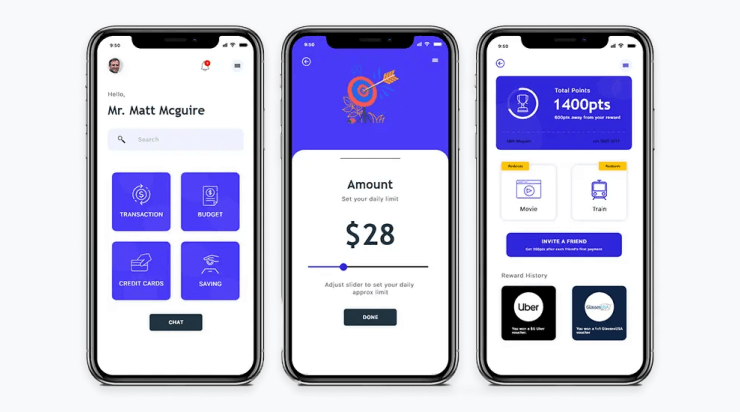
Cleo, a personal finance app, uses open banking APIs along with AI technology to provide personalized budgeting advice and financial insights based on users’ transaction data and spending habits. By combining these technologies, Cleo can deliver real-time financial tips and alerts, empowering users to make smarter financial decisions and maintain better control over their finances.
How can open banking power budgeting and savings tools?
Budgeting and savings products can categorise expenses, generate spending reports, alert users to a breached budget, and propose savings targets. The product should expose uncertain categorisations to the user, preserve manual overrides, and make clear whether an automated transfer is a recommendation, an instruction, or a separately authorised payment.
Budgeting products need the same account, balance, and transaction data as aggregation workflows, plus stable categorisation rules, data-freshness indicators, and a user-visible correction path.
Examples of APIs that can be used to build budgeting and savings tools:
- Plaid API: Provides access to a wide range of financial data, enabling detailed transaction categorization and personalized financial insights.
- Tink by Visa: Provides financial-data connectivity and enrichment in supported European markets.
- Yapily: Provides open-banking connectivity for supported institutions and markets; verify the required banks and data fields during vendor selection.
Case study:
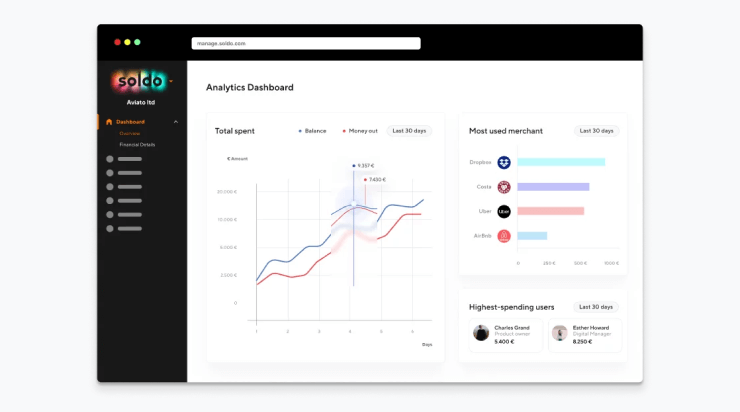
Soldo leveraged Yapily API to build a decentralized spend management platform to help businesses manage their decentralized spending. This innovative platform allows businesses to allocate budgets, track expenses in real-time, and gain comprehensive insights into their financial activities, ultimately improving financial control and efficiency across the organization.
How can open banking automate financial operations?
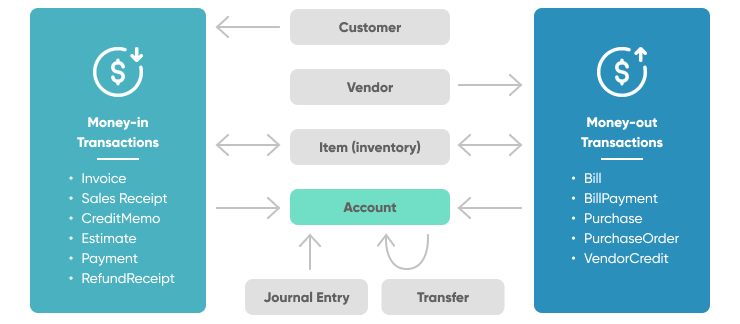
Open banking data can automate matching, cash-position updates, accounting entries, and reconciliation. A resilient B2B implementation uses a canonical ledger or transaction model, idempotent ingestion jobs, exception queues for unmatched items, and an immutable audit log that connects each accounting record to its source event.
Examples of APIs for streamlining financial operations:
- Xero API: Integrates seamlessly with a customer’s bank account to automate a wide range of accounting tasks. From bank reconciliation to expense tracking, Xero helps businesses maintain up-to-date financial records with minimal manual intervention.
- QuickBooks API: QuickBooks’ API connects with various banking platforms, enabling businesses to automate financial processes such as transaction categorization, invoice generation, and comprehensive financial reporting, thus simplifying financial management.
- Stripe Connect API: Stripe’s API offers a unified platform for managing payments, billing, and financial reporting. By automating these processes, businesses can reduce administrative overhead, improve cash flow management, and gain valuable insights into their financial health.
Case study:
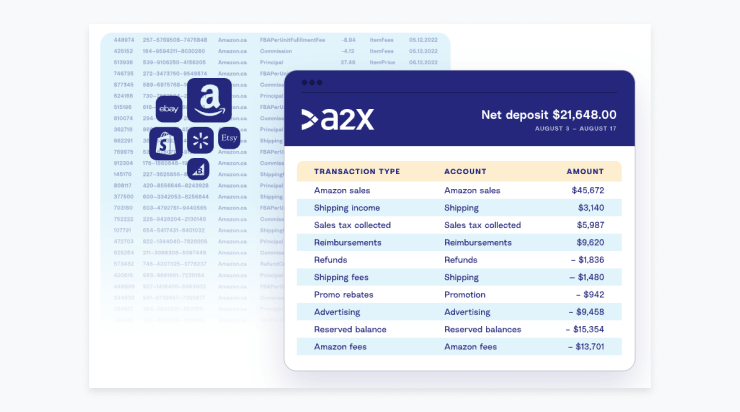
A2X uses the Xero ecosystem to post ecommerce sales and fees into accounting records. The integration pattern is relevant to finance teams because it converts marketplace events into a reviewable reconciliation workflow rather than relying on spreadsheet exports.
How can open banking strengthen fraud prevention?
Open banking data can add useful signals to a fraud workflow, including account ownership, transaction patterns, and cash-flow behaviour. It should complement—not replace—device intelligence, sanctions screening, behavioural signals, case-management controls, and human review for high-risk decisions.
Open banking data APIs and specialist KYC, KYB, and fraud vendors solve different problems. A risk architecture should specify which signal triggers a review, who can override a decision, how false positives are measured, and how the organisation can explain an adverse outcome.
Examples of APIs for fraud prevention:
- Trulioo KYC API: Provides identity-verification capabilities that teams can incorporate into a KYC workflow.
- Trulioo KYB API: Provides business-verification capabilities using company and ownership information.
- Sift API: Provides risk signals and decisioning capabilities for fraud-prevention workflows.
- Fidel API: Provides transaction-data connectivity that can enrich monitoring and risk workflows.
Case study:
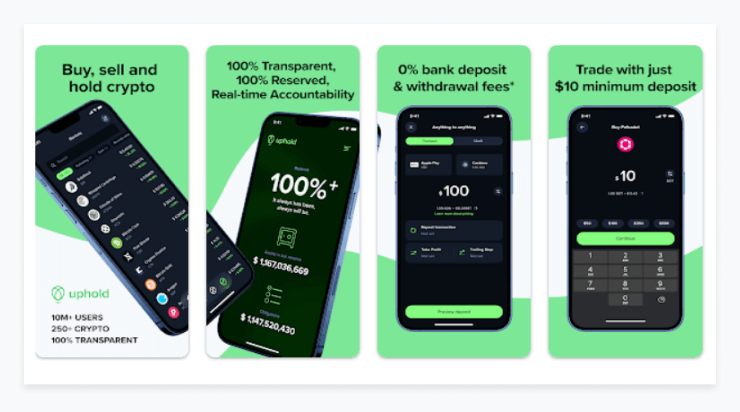
Uphold, a multi-asset digital-money platform, uses Sift’s risk products at account creation and during transactions. The case demonstrates the value of deploying fraud controls at several journey points rather than treating fraud detection as a single post-payment check.
How can lenders use open banking in credit workflows?
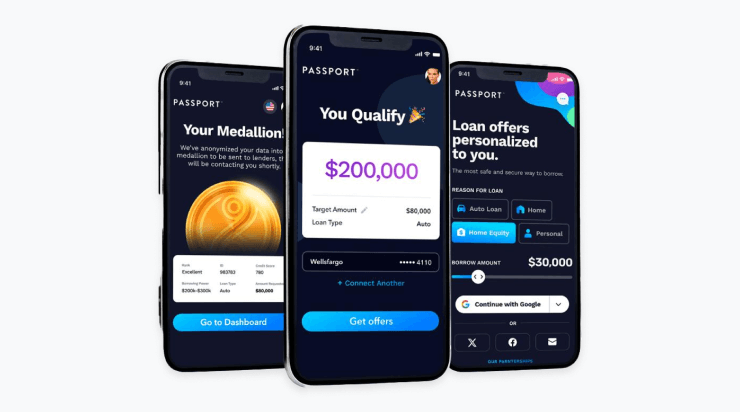
With explicit consent, lenders can use account data to support income, affordability, and cash-flow assessment. Any automated credit decision needs documented governance: decision logic, data quality thresholds, adverse-action requirements where applicable, model monitoring, and a manual-review path.
Some APIs provide credit-report or score data, while others provide financial data that can inform an affordability assessment. These inputs have different legal, operational, and explainability requirements; a lender should not treat data access as an automatic approval decision.
Examples of APIs for offering loan and credit solutions:
- Experian API: Offers credit-data products for eligible lending and risk workflows.
- CRS API: Offers credit-data products that may include bureau, public-record, and alternative-data inputs.
- Finicity Lending API: Offers consumer-permissioned financial-data connectivity for lending workflows.
- Equifax API: Offers access to consumer-credit and related data products, subject to eligibility and jurisdiction.
- MX Loan Origination and Processing: Provides financial-data connectivity that can support loan-origination workflows.
Case study:
FormFree uses MX connectivity to help lenders verify identity, assets, income, and employment. For a lender, the architectural lesson is to retain verifiable source evidence and decision logs rather than relying on an opaque score alone.
How can transaction data improve financial education?
An open banking API can support financial-literacy tools with consented transaction and balance data. The product can surface spending patterns, budgeting prompts, and educational content, but it must distinguish educational guidance from regulated investment, debt, or credit advice.
For example, an education app can identify recurring costs or budget variance and show the user the underlying transactions. Recommendations should be explainable, optional, and correctable by the user; automated transfers or credit-related actions require a separate, explicit authorization path.
Examples of APIs for providing financial education:
- Plaid API: Provides secure access to users' bank account data, including transaction history, account balances, and spending patterns that could then be used to develop financial education apps.
- Tink by Visa: Open banking platform that enables financial institutions, fintechs, and merchants to build tailored financial management tools, products, and services for European consumers and businesses based on their financial data.
- MX API: Provides secure access to detailed financial data, including transactions, account balances, and spending trends, enabling apps to deliver personalized financial education.
Case study:
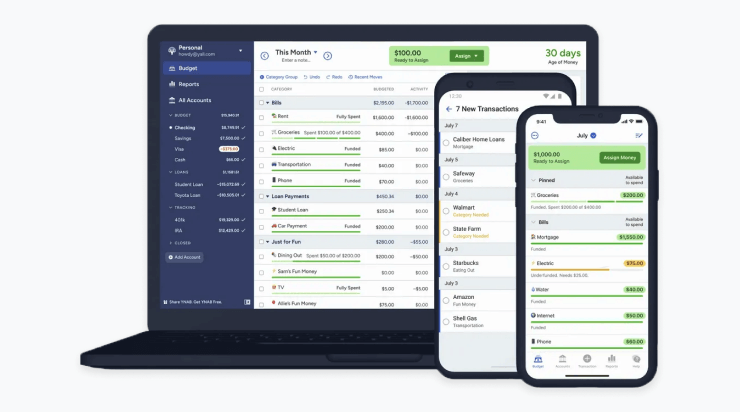
YNAB integrates with Plaid via API to offer detailed transaction categorization and personalized budgeting insights. By connecting with bank accounts for real-time updates and detailed financial reports, YNAB helps users gain control over their finances and develop healthier money habits.
Which new digital services can open banking enable?
Open banking can supply consented inputs for products that would otherwise rely on delayed exports or manual declarations. AI features must be bounded by the same consent, retention, security, and decision-governance controls as the underlying financial data. Examples include:
- Financial chatbots: Provide real-time account information, assist with fund transfers, and offer personalized budgeting tips based on transaction history.
- Virtual assistants: Schedule bill payments, set up alerts for unusual transactions, and provide tailored investment advice.
- AI-powered expense trackers: Analyze spending patterns and suggest ways to save money or optimize spending.
- Automated savings tools: Transfer surplus funds to savings accounts based on income and expense analysis.
- Personalized loan and credit offers: Assess creditworthiness using real-time financial data to offer customized loan products.
- Investment advisory services: Use financial data to recommend investment strategies tailored to individual goals.
- Voice-activated banking services: Enable users to perform banking tasks through voice commands, integrating with platforms like Alexa and Google Assistant.
For these products, a pragmatic architecture can use Python services for data normalisation and rules, an event queue for webhook processing, and an AWS-managed database and key-management service for protected storage. If an LLM is used for a customer-facing explanation, keep it away from payment execution, retrieve only the minimum permitted data, apply output guardrails, and log the decision context. Any payment, lending, or investment action must remain behind deterministic business rules and an explicit authorization flow.
Case study:
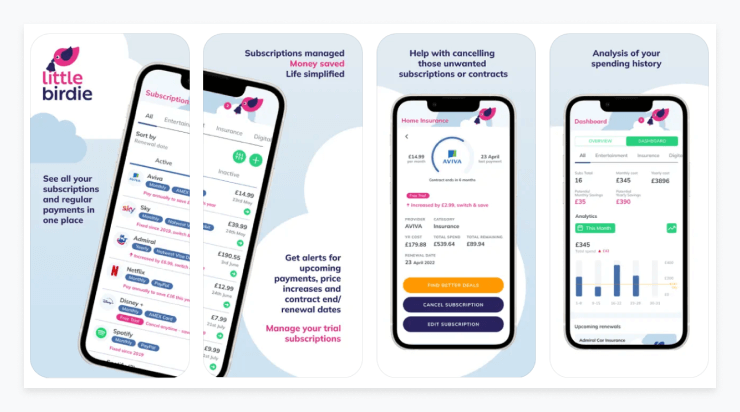
Little Birdie addresses the problem of wasted money on unused subscriptions with a subscription and bill management app for UK customers. Bud's AI-powered data intelligence platform identifies and categorizes recurring payments so that consumers can cancel or switch to a better deal.
What should a fintech build before integrating an open banking API?
Start with one workflow and a measurable baseline. Then define the consent and data-retention model, choose a provider based on verified coverage, design failure and reconciliation paths, and instrument the flow with traceable events. This sequence makes the expected ROI reviewable and prevents an API integration from becoming an unowned compliance and operations dependency.
For related implementation decisions, see FinTech API use cases, financial app development, and software development for finance. SoftKraft can help define the integration boundary, security controls, delivery plan, and operational model for a financial product. Contact us.