![2026 Guide to ChatGPT Enterprise [Benefits, Risks & How It Compares]](/.netlify/images?url=_astro%2Fchatgpt-enterprise.DoxG6j2E.png)
ChatGPT’s enterprise journey has matured dramatically since its consumer breakthrough. ChatGPT now serves hundreds of millions of weekly active users, and the conversation inside large organizations has shifted from “Should we use generative AI?” to “Which enterprise AI platform best fits our stack, governance, and workflow requirements?”
With enterprise AI spending continuing its rapid climb, OpenAI has continued to evolve ChatGPT Enterprise. It now delivers frontier models and advanced reasoning capabilities, persistent workspaces via Projects, native data connectors, and agentic capabilities — all wrapped in stronger enterprise controls. In this 2026 guide, we break down the current benefits, the risks that remain, and how ChatGPT Enterprise stacks up against Claude Enterprise and Gemini for Workspace.
What is ChatGPT Enterprise?
ChatGPT Enterprise is OpenAI’s flagship enterprise-grade plan, built for large organizations that need frontier AI capabilities with robust security, compliance, and administrative oversight.
Since its 2023 launch, it has expanded to include OpenAI’s full model suite (latest frontier models and advanced reasoning capabilities), Projects for persistent context and shared workspaces, native Apps/Connectors to company data sources (SharePoint, Google Drive, GitHub, Box, etc.), and agentic tools. It remains the version of ChatGPT that does not train on your business data by default.
Key benefits of ChatGPT Enterprise
ChatGPT Enterprise in 2026 delivers production-grade AI with the security, scale, and integration features large organizations demand.
Enterprise-grade security & compliance
ChatGPT Enterprise provides significantly stronger protections than consumer or Business plans:
- No training on your data by default — conversations and uploaded files are not used to improve OpenAI models.
- Advanced controls — SCIM, EKM, role-based access, domain verification, user analytics, and custom data retention policies.
- Data residency — choose among ten regions.
- Compliance — SOC 2 Type 2, GDPR/CCPA alignment, encryption at rest and in transit, and support for custom legal/BAA terms.
Enterprise management tools
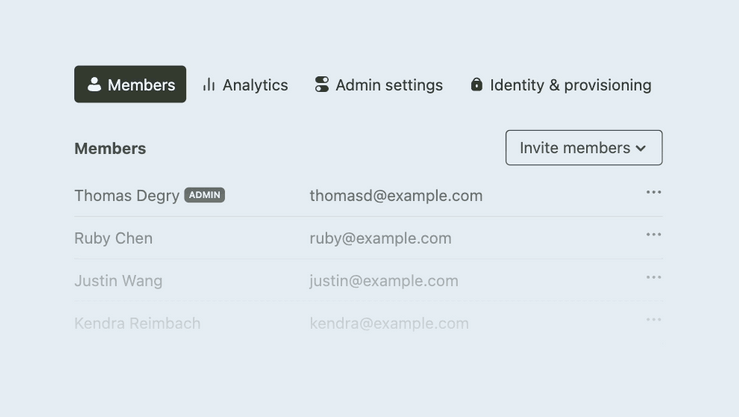
A full admin console gives IT and security teams the visibility and control they expect:
- Single sign-on (SAML/SSO) and MFA
- Domain verification and role-based access controls
- Bulk member management and usage analytics
- Dedicated workspace with audit logs and governance
Unlimited access to frontier models & agents
Enterprise removes usage caps on the latest frontier models and advanced reasoning capabilities. Teams get:
- Unlimited access to the latest frontier and reasoning models (including extended thinking modes)
- AI agents that can be delegated complex tasks with a single prompt (coding, research, multi-step projects)
- Faster performance and priority access during peak times
Persistent context with Projects + expanded context windows
Projects let teams create dedicated workspaces with persistent memory, shared files, and long-running context across conversations — solving the “reset after every chat” problem of earlier versions.
Combined with significantly longer context windows (expanded for larger files and documents), this makes ChatGPT Enterprise far more useful for complex work such as contract review, codebase exploration, or multi-month project planning.
Native data connectors & Advanced Data Analysis
Enterprise now includes built-in Apps/Connectors that securely pull knowledge from Microsoft SharePoint, Google Drive, GitHub, Box, and more (with read/write capabilities in many cases). Advanced Data Analysis has also matured, offering synthesis, transformation, and extraction across documents, spreadsheets, and presentations at enterprise scale.
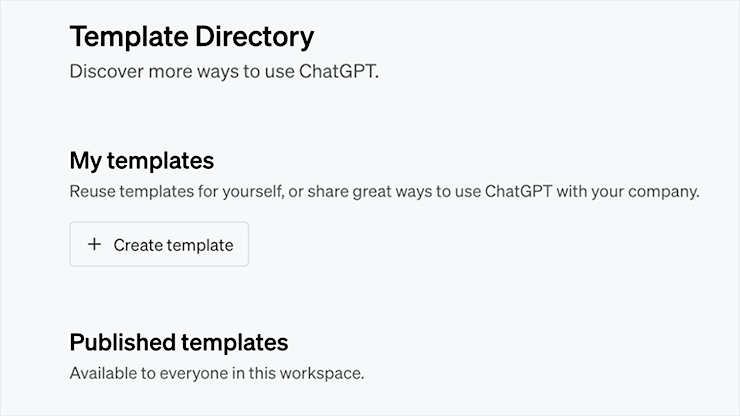
Shared Projects & custom workspace tools
Instead of one-off chat templates, teams now build and share Projects, custom GPTs, and agentic workflows inside the dedicated workspace. This democratizes AI across skill levels while keeping everything governed and auditable.
Mature customization layer
The original GPT Store has been deprioritized in favor of internal custom GPTs and workspace-specific tools that admins can control. Organizations can build tailored AI assistants that reference only approved company data and comply with internal policies.
Top risks of ChatGPT Enterprise
Even with major improvements, several practical limitations and risks remain in 2026:
Data leakage still depends on user behavior
Enterprise offers excellent backend protections, but employees can still paste sensitive information into prompts. The risk of accidental exposure of PII, IP, or strategic plans remains real unless strict usage policies and data-loss-prevention layers are enforced.
Hallucinations & lack of native citations
Like all frontier LLMs, the latest OpenAI models can still hallucinate. Enterprise does not automatically provide source citations for every claim, so high-stakes use cases (legal, medical, financial) require human review or retrieval-augmented workflows.
Integration & governance overhead
Connecting company data sources requires setup, ongoing permission management, and monitoring. While Connectors are powerful, they introduce new surfaces that security teams must govern.
Pricing remains custom and opaque
Enterprise pricing is still quote-only and typically starts in the $40–$60 per user per month range (volume-dependent, minimum seat commitments often apply). Organizations must engage sales directly, making budgeting and ROI modeling more complex than with published Business-tier pricing.
Performance can vary under load
While OpenAI has improved speed and reliability, shared infrastructure means latency can still fluctuate during peak global usage. Most enterprises report it is now competitive, but it is not guaranteed like dedicated Azure OpenAI deployments.
Vendor lock-in & ecosystem dependency
Heavy reliance on OpenAI’s models and connectors can create lock-in. Organizations deeply invested in Google Workspace or Microsoft 365 may find tighter native integration (and potentially simpler governance) with Gemini for Workspace or Microsoft Copilot.
How ChatGPT Enterprise compares in 2026
Every serious enterprise buyer now evaluates a three-horse race. Here is a practical decision matrix:
| Factor | ChatGPT Enterprise | Claude Enterprise | Gemini for Workspace |
|---|---|---|---|
| Best for | General productivity, coding, broad adoption | Safety, long-context reasoning, knowledge work | Google-native organizations |
| Context window | Strong (expanded for files) | Largest (200K–500K+ tokens) | Very large + native Workspace context |
| Data connectors | Excellent (SharePoint, Drive, GitHub, Box) | Strong knowledge base ingestion | Native & deepest Google Workspace integration |
| Agentic capabilities | Strong (Codex agents, single-prompt tasks) | Very strong (Artifacts, Projects) | Good (agentic features in Workspace) |
| Security & compliance | SOC 2, SCIM, EKM, custom retention, data residency | Strong safety focus + enterprise controls | Leverages Google Cloud compliance |
| Admin & governance | Mature console + analytics | Good (SSO, RBAC, audit) | Excellent for Workspace admins |
| Pricing model | Custom (higher per-user) | Custom | Often lower add-on to existing Workspace |
| Adoption speed | Fastest (employees already know ChatGPT) | Slightly slower | Fastest inside Google shops |
Quick recommendation:
- Choose ChatGPT Enterprise if your workforce already uses ChatGPT heavily and you need broad productivity + coding agents.
- Choose Claude Enterprise for research-heavy or highly regulated teams that value safety and massive context.
- Choose Gemini for Workspace if your company lives in Gmail, Docs, Sheets, and Meet.
Many large organizations now run a dual- or triple-vendor strategy.
What’s next for AI in the enterprise environment?
Enterprise AI adoption is no longer experimental. OpenAI's enterprise business has grown significantly as a share of total revenue, and Global 2000 companies continue to allocate larger portions of IT budgets to AI, focusing on scalable deployment, workforce upskilling, and measurable ROI.
The next phase is moving from pilots to embedded AI agents and connected workflows inside core business systems.
If you’re evaluating or expanding your enterprise AI strategy, our team can help you build a vendor-agnostic roadmap, select the right platform(s), and integrate them securely into your existing tech stack.
Conclusion
ChatGPT Enterprise in 2026 is a far more mature and capable product than the 2023 version. With frontier models, persistent Projects, native data connectors, and stronger governance, it remains a leading choice for organizations that want powerful, familiar AI at enterprise scale.
The decision is no longer “ChatGPT or nothing” — it’s about aligning the right platform with your ecosystem, risk tolerance, and strategic priorities. Use this guide to evaluate honestly, then move forward with confidence.