![2026 Guide to ChatGPT Enterprise [Benefits, Risks & How It Compares]](/.netlify/images?url=_astro%2Fchatgpt-enterprise.DoxG6j2E.png&w=740&h=416&dpl=6a953c6cead2e800083339bd)
2026 Guide to ChatGPT Enterprise: Benefits, Risks & How It Compares
Quick Answer: ChatGPT Enterprise is a managed AI workspace for organizations that need centrally administered access to OpenAI models, identity controls, and governed use of company knowledge. It suits broad knowledge-work and software-delivery use cases when SSO, data handling, auditability, and adoption speed matter. For regulated or workflow-critical processes, pair it with explicit data classification, retrieval controls, human review, and measurable ROI—not prompts alone.
- What is ChatGPT Enterprise and what does an enterprise actually buy?
- Which ChatGPT Enterprise capabilities matter in a production operating model?
- Centralized identity, access, and policy controls
- Faster access to general-purpose AI for knowledge work and engineering
- Connectors can make company knowledge useful, but only with permission-aware retrieval
- Advanced analysis helps with bounded, reviewable data tasks
- Workspace tools support governed experimentation before custom development
- What are the material ChatGPT Enterprise risks and how should teams mitigate them?
- ChatGPT Enterprise vs Claude, Gemini, and a custom AI workflow: which option fits?
- How should a CTO pilot ChatGPT Enterprise without creating unmanaged AI debt?
- Conclusion: is ChatGPT Enterprise the right enterprise AI platform?
What is ChatGPT Enterprise and what does an enterprise actually buy?
ChatGPT Enterprise is OpenAI’s managed workspace for organizations that want to provide ChatGPT under centralized administration rather than as unmanaged individual subscriptions. The value is not merely access to a model. The operating model combines identity, workspace administration, content controls, usage visibility, and contractual terms appropriate to an enterprise procurement process.
OpenAI states that it does not train its models on Enterprise business data by default; procurement and security teams should still validate the current Enterprise privacy commitments, retention configuration, data-residency options, subprocessors, and applicable agreement before rollout. Product entitlements and connector availability can vary by contract and region, so the architecture should never depend on a feature without confirming it in the tenant.
For a CTO, the practical question is: can ChatGPT Enterprise safely support a defined workflow faster and at lower total cost than a custom application? A useful answer requires a data-flow diagram, a control owner for each integration, and a baseline for quality, latency, adoption, and cost per completed task.
Which ChatGPT Enterprise capabilities matter in a production operating model?
ChatGPT Enterprise can shorten the path from approved use case to employee adoption. It does not remove the need to design authorization, evaluation, or incident response around a workflow that uses enterprise data.
Centralized identity, access, and policy controls
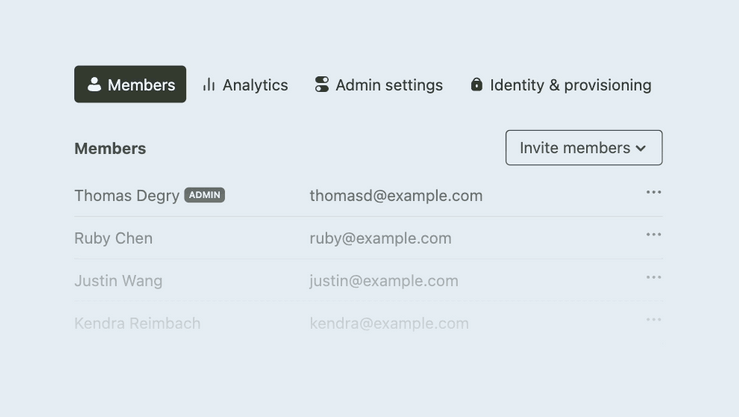
Enterprise deployment should begin with identity integration and least privilege, not a company-wide invitation. Typical controls include SAML SSO, SCIM lifecycle provisioning, MFA enforced by the identity provider, role-based workspace administration, domain verification, and audit evidence. Map these controls to the organization’s ISO 27001, SOC 2, GDPR, HIPAA, or sector-specific obligations; a vendor attestation is evidence, not automatic compliance.
Faster access to general-purpose AI for knowledge work and engineering
ChatGPT Enterprise can support drafting, analysis, coding assistance, document synthesis, and research across departments without each team procuring a separate AI tool. Projects and shared workspace resources can preserve task context, but access boundaries still need to follow the source system. A project containing commercial, HR, or codebase material should use the same data classification and owner model as the underlying repository.
Connectors can make company knowledge useful, but only with permission-aware retrieval
Connectors to systems such as Google Drive, Microsoft SharePoint, GitHub, or Box reduce manual copy-paste and can keep answers closer to the current source material. The rule is simple: the assistant must not reveal a document to someone who could not open that document in its original system.
Before enabling a connector, test five things: OAuth scopes, group synchronization, inherited permissions, offboarding and token revocation, and audit logs. If document-level access rules do not carry through, do not connect the source.
Advanced analysis helps with bounded, reviewable data tasks
Start with a bounded task and a named reviewer: classify invoices, summarize a contract pack, generate test cases, or reconcile a data-quality exception list. For intelligent document processing (IDP), split the work: an OCR engine extracts text and layout, a Python service applies business rules, and the model explains ambiguous cases. This makes accuracy measurable and sends uncertain cases to an exception queue instead of silently automating a high-risk decision.
Workspace tools support governed experimentation before custom development
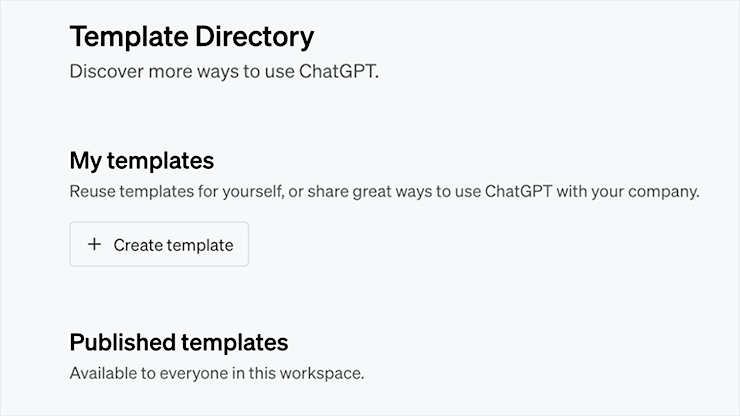
Internal assistants and shared workflows are useful for testing prompt patterns, user demand, and failure modes. Promote a workflow to a custom service when it needs deterministic integration logic, a domain-specific user interface, service-level observability, or machine-to-machine execution. The guide to custom LangChain agents explains the tool calling, retrieval, and execution-loop components that a production workflow typically needs.
What are the material ChatGPT Enterprise risks and how should teams mitigate them?
The largest risks are usually not model access itself. They arise where a model can see sensitive data, make an unverified claim, trigger an action, or become embedded in a business process without a control owner.
Sensitive-data exposure through prompts, uploads, or connectors
Central administration cannot stop an employee from pasting personal data, source code, credentials, customer contracts, or strategic plans into a prompt. Keep the policy easy to follow: define which data classes are allowed, block secrets before upload, teach redaction, and apply DLP controls at endpoints and source systems. Review the broader threat model in Is OpenAI Safe? A practical look at OpenAI data security.
Incorrect output, weak provenance, and unsafe automation
An LLM can produce text that sounds credible but is wrong. For knowledge tasks, require links to approved source documents and test answers against representative examples. Keep a human approval step for legal, financial, medical, employment, and production-change decisions. A RAG workflow should return source identifiers and permission-filtered passages, not only a fluent answer.
Integration debt and authorization drift
Every connector creates another access path. Treat it like any other third-party integration: record it in an inventory, assign an owner, test offboarding, monitor authorization failures, and practice revocation. Apply the same controls to any custom integration: keep secrets in a managed secret store, retain audit events, and monitor the workflow from request to outcome.
Uncontrolled spend and unclear ROI
Enterprise pricing and entitlements are negotiated. A custom application also adds model-token, vector-storage, cloud, engineering, and support costs. Do not rely on a generic “hours saved” claim. Choose one baseline—handling time per ticket, first-draft acceptance rate, document exception rate, engineering lead time, or cost per classified document—and compare the pilot with it. Include review time, failed runs, and operating costs. See AI development costs: eight factors to assess for the build-side cost model.
Vendor dependency and changing product boundaries
Model availability, rate limits, context limits, connector features, and commercial terms can change. Keep workflow instructions, evaluation datasets, and business rules outside a single vendor’s proprietary configuration. A portability plan might use a Python service layer, provider-agnostic prompt and evaluation interfaces, and an abstraction around retrieval and tools—but it cannot make proprietary model behavior identical.
Compliance gaps caused by an incomplete operating model
No AI product alone establishes compliance. The NIST AI Risk Management Framework provides a useful structure for governing, mapping, measuring, and managing AI risk. Organizations operating in the EU should also assess how their use case relates to the EU AI Act, legal advice, and existing privacy, security, and record-keeping obligations.
ChatGPT Enterprise vs Claude, Gemini, and a custom AI workflow: which option fits?
The choice comes down to three questions: Where does the source data live? How much control does the workflow need? Is the work general-purpose or business-critical? Do not buy from a static feature checklist. Confirm current contract terms and run the same representative test cases on each shortlisted option.
Use the current primary sources during procurement: OpenAI Enterprise privacy and security, Anthropic’s Claude Enterprise plan, and Google Workspace with Gemini. These pages document vendor capabilities, but they do not replace a security review of the specific tenant configuration and contract.
| Decision criterion | ChatGPT Enterprise | Claude Enterprise | Gemini for Workspace | Custom AI workflow |
|---|---|---|---|---|
| Best fit | Broad cross-functional AI adoption in a centrally managed ChatGPT workspace | Teams that prefer Claude after testing its output quality and enterprise controls | Organizations already working primarily in Gmail, Docs, Drive, Sheets, and Meet | A high-value process requiring a tailored UI, system actions, or domain logic |
| Primary control point | Workspace administration, identity controls, and approved connectors | Claude workspace administration and approved knowledge sources | Existing Workspace identity, Drive permissions, and administration | Application IAM, retrieval pipeline, policy engine, and deployment environment |
| Integration question | Can existing data-source permissions be preserved? | Can approved sources and workflows meet the use case? | Is Workspace already the system of record? | Can APIs, event flows, and data contracts be built and operated safely? |
| Governance burden | Vendor controls plus internal usage policy | Vendor controls plus internal usage policy | Vendor controls plus Workspace governance | Highest: controls, evaluations, observability, security, and support are the buyer’s responsibility |
| Economics | Seat-based commercial model; validate contract terms | Seat-based commercial model; validate contract terms | Often evaluated with the existing Workspace estate | Build and run cost, including cloud, model usage, maintenance, and on-call support |
| When not to choose | Do not choose it when the process requires a controlled action in core systems or a reproducible evidence trail that the workspace cannot provide | Do not choose it only because of model preference; reject it if the tenant, integration, or procurement controls do not fit | Do not choose it when the organization is not materially using Workspace or needs integrations it cannot govern | Do not choose it for a low-value task that a managed workspace can solve with less delivery and operating overhead |
Choose ChatGPT Enterprise when the immediate goal is governed employee productivity and the workspace meets data, identity, and procurement requirements. Choose Gemini for Workspace when Google Workspace is the core collaboration layer and its native administration reduces integration work. Evaluate Claude Enterprise using the same test cases and security criteria. Build a custom workflow when the process must take controlled actions in CRM, ERP, IDP, or internal systems, or when it needs reproducible retrieval, evaluation, and audit trails.
Some organizations use more than one model provider for resilience or capability coverage. That strategy only helps when identity, data classification, evaluation, and cost allocation are consistent across providers.
How should a CTO pilot ChatGPT Enterprise without creating unmanaged AI debt?
Start with two or three workflows that have an accountable business owner, accessible source data, a measurable baseline, and a low enough consequence of error to support a controlled pilot. Avoid selecting use cases only because they make a compelling demo.
- Map the data path. Document users, prompts, uploads, connectors, model outputs, retention, and subprocessors. Classify every data source before it enters the workspace.
- Set identity and governance controls. Integrate SSO and SCIM, define administrator roles, publish permitted-use rules, and create a process for connector approval and revocation.
- Create a test set. Collect representative, non-production examples and define acceptance criteria for accuracy, citations, latency, and escalation to a human reviewer.
- Measure business outcomes. Track the pre-pilot baseline and report quality-adjusted throughput, adoption, unit cost, and risk events—not raw prompt counts.
- Productionize selectively. Move repeatable, high-value workflows into a custom service when they need orchestration, API actions, SLA monitoring, or a controlled RAG pipeline.
For broader planning, 12 enterprise AI trends shaping 2026 covers governance, interoperability, IDP, and the build-vs-buy decisions that surround platform selection.
Conclusion: is ChatGPT Enterprise the right enterprise AI platform?
ChatGPT Enterprise is a viable platform for centrally governed AI adoption, but it is not a complete enterprise AI architecture. Its strongest use is accelerating approved knowledge work while the organization establishes identity controls, data boundaries, evaluation, and accountable human review.
The decision should follow the workflow. Use a managed enterprise workspace for broad, low-to-medium-risk use cases. For critical processes that require controlled integrations, retrieval provenance, observability, and measurable unit economics, use a custom service built in the language and cloud environment that fit the organization’s existing architecture. Python and AWS are common examples, not universal requirements.